What did Mayor Adams think?

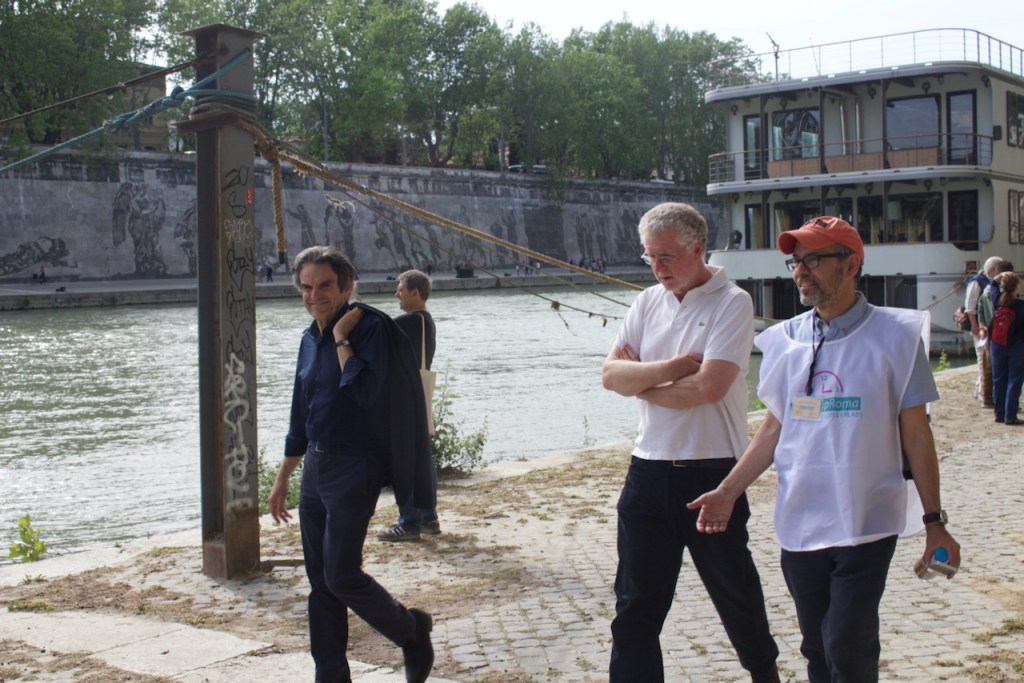
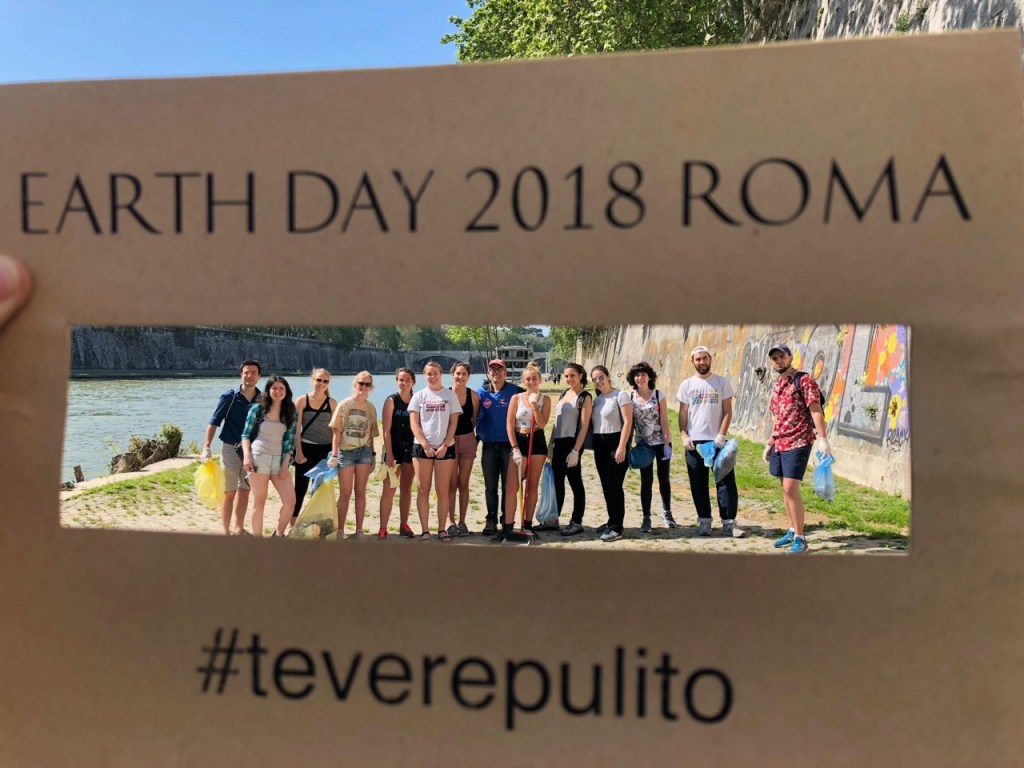
I stopped by Piazza San Cosimato today to check out the activities organized as part of Roma Cura Roma, an annual event dedicated to the thousands of volunteers who contribute to solving Rome’s civic problems. Along with the city’s waste management company, AMA, present were Retake, WWF, Plastic Free, FAI, ACLI, CSV Lazio, AGESCI, MASCI and Legambiente Lazio. Trastevere Attiva often contributes to this part of the city, cultivating green spaces such as the beautiful Cortile di Mica Aurea. Lots of busy volunteers cleaned up the pedestrian zone around the playground and painted over graffiti.
Politicians such as Rome’s Mayor took the opportunity to pose for photos with volunteers and even welcome New York Mayor Eric Adams who happened to be in town.
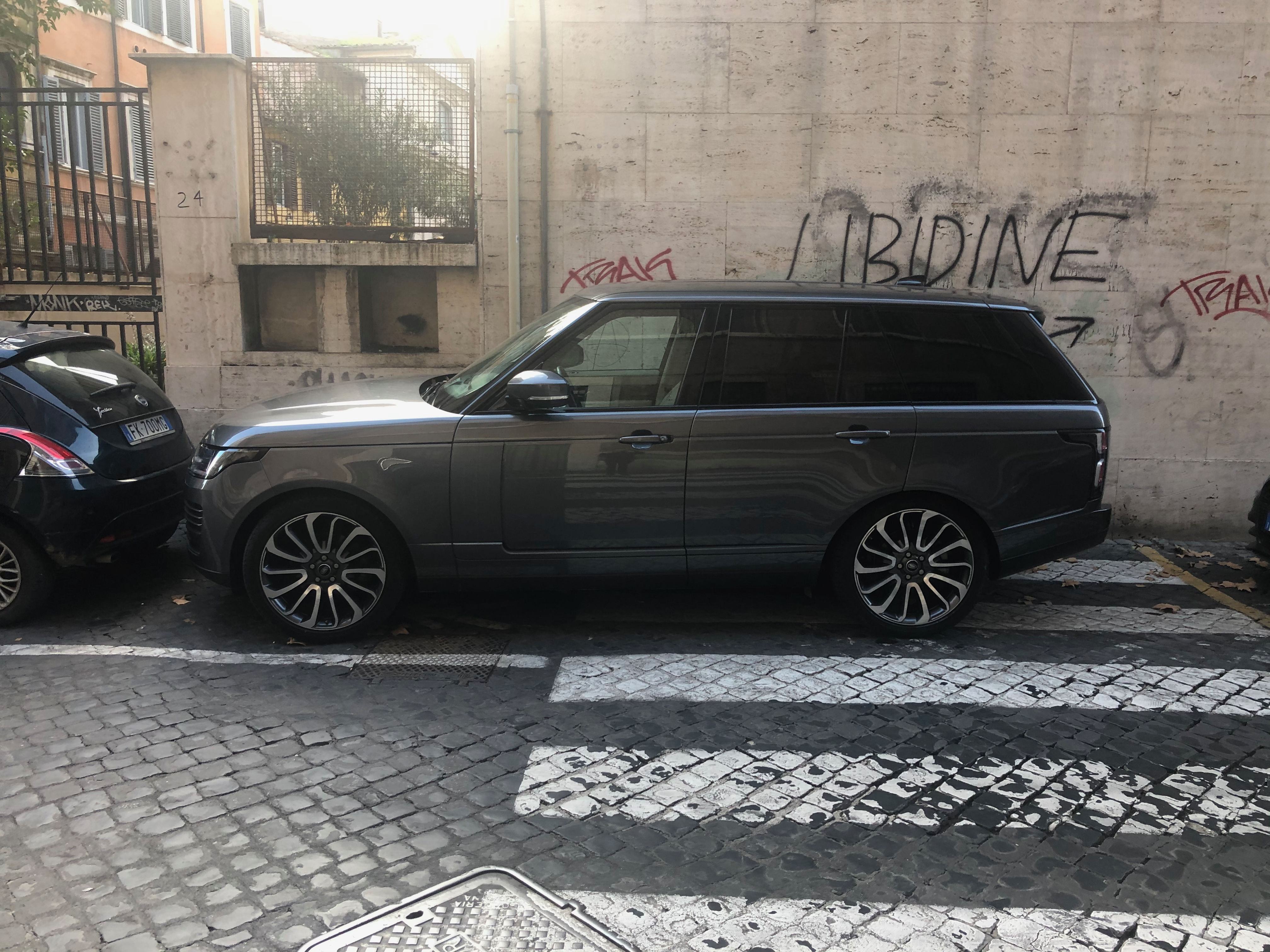
As a Roman resident, I was happy to see so many active citizens but embarrassed by the lawlessness which prevails all around Trastevere, especially with regard to automotive infractions. What did Mayor Adams think on seeing cars parked in tow away zones or pedestrian crossings right under the eyes of Rome’s mayor and dozens of law enforcement officers? Would the same happen in New York?
While it is one thing for organizations like Retake to step in and clean up to help AMA do its job, it’s impossible for volunteers to enforce no parking laws or tow cars. On pointing out the presence of cars in pedestrian zones I was told by the police in no kind words to mind my own business.


Long Absence, Little Progress

Rome lost the bid to host Expo 2030. Surprise. Did anyone really think it was a good idea to host a world event in a city so poorly managed and maintained?
Instead the choice went to Riyadh Saudi Arabia. I see Mayor Roberto Gualtieri is attending an event tomorrow called “Cities for Life; against the death penalty” and he may not be able to resist a prod at Riyadh. It’s true, a world expo will be held in a country whose government beheads humans publicly, although far fewer than the 9 people killed daily on Italy’s roads.
I realized today that this blog had been abandoned, perhaps because my hopes at actually achieving a sustainable Rome have withered. Since last writing Rome has seen only declined on all counts. Illegality reigns supreme, public space has ceased to exist, automotive violence has reached a crescendo and urban vegetation is dying off rapidly. Rome definitely doesn’t work. If this sounds negative, I might soften it by pointing out that Rome is still the world’s most resilient city and Romans have a knack for shrugging off situations which would bring Americans or other Europeans to their breaking points. The hour spent waiting for a bus was at least passed in the company of amusing Romans and under a dramatic full moon peering up over the city scape.
But enough is enough. Recent trips to New York, Venice and Strasbourg reminded me that cities can work and there is no reason Rome cannot pull itself together; it lacks only the political will and courage.
New York is far denser than Rome and yet there are far fewer private cars on the street. Why? Because transit works, biking, walking and public transit are fast without cars in the way, and perhaps most importantly you can’t park for free in the city. If a Roman visitor to New York tried parking as they do at home — at a bus stop, on a crosswalk, or anywhere not designated as official paid parking with prices around $25/hour– they would go broke quickly between fines and cabs to reclaim their towed car. So the city has great public spaces open to everyone and expensive private parking structures. Rome is becoming the opposite; visitors are charged for entering the Pantheon which was always free but you can park for free in the pedestrian space outside and it is unlikely you’ll ever pay a fine.
In historic Venice they wouldn’t have that option, but they could count on the punctual arrival of vaporetti and walking small distances across town–distances impossible in cities which have been scaled to motor vehicles. I spent several days in Venice last month and each walk I took I rejoiced the freedom of just walking, not stopping to wait to cross a street, not detouring around big boxes set down on public space, not breathing in car exhaust. Returning to Rome was a shock: children being constantly admonished “watch out for the car”, dogs on leashes lest they run into the street (in Venice they know enough not to fall into canals), and people driving short distances that would be a pleasant stroll if not for all the cars and the damaged streets.
In Strasbourg everywhere I went was either car-free or zone 30. I rode the tram constantly with a cheap 3 day pass and never waited more than a few minutes. I never found it crowded or dirty. The digital info boards were accurate, announcing the exact arrival times which were always reasonable. The stops were sheltered from the elements, well-illuminated, and some even had seating, something I rarely see in Rome. Here it has become rare to find a bus stop in which cars haven’t parked, making it near impossible to board the bus.
So while waiting for the 870 bus which connects central Rome and the populous Monteverde neighborhood, a bus only scheduled every 25 minutes at rush hour which is absurd, I read about how disappointed city officials are that Rome was passed over for the next Expo. The former mayor, Virginia Raggi, who directed the expo committee, will probably take the blame, although had she been reelected and been able to finish what she started in 2017, I’m convinced Rome would be on much better footing and may have even earned the right to the expo.
Instead the administration of Rome today has achieved nothing and taken visible steps backwards. Parks like Villa Sciarra are locked today because of lack of maintenance (and large parts have been closed for years). Pedestrian spaces like Piazza Farnese have become illegal parking lots. Nearby, the planned park on Via Giulia is still an abandoned construction site, forcing pedestrians to cut through the private underground parking garage to reach the riverfront. Water fountains have stopped working throughout Rome, but minimarkets selling water in plastic bottles abound. Tourist destinations like the Colosseum are in the hands of commercial agencies that scalp the tickets, making it impossible to pay the legal price to enter. The dumpsters which were to have been replaced by a more sophisticated European waste management solution are still there but irrationally placed, often inaccessible, broken, overflowing and frequently a magnet for late night criminal junk deposits. Every morning my neighborhood awakes to find piles of mattresses, refrigerators and the like on the sidewalk.
Almost all these polemical observations above refer to illegal behavior. So you would think the police would be busy cracking down and collecting fines, bringing welcome funds to the city’s coffers. Not in Rome. Try pointing out violations to the municipal police and you will most likely be met with bored disinterest if not a more aggressive “mind your own business”. The police are busy but not enforcing the law. Their principal activities are officiating over accident reports or directing traffic at intersections in order to prevent traffic jams. They don’t even fine people who run red lights and get stuck in the middle of intersections; they merely try to help liberate the road to allow more cars through (yes, I see this every day). So they are busy helping the traffic flow faster, and then we are surprised that there are more accidents? Wouldn’t it make more sense for the local police to let the traffic get snarled and spend their time walking around the city fining illegally parked cars? Drivers would catch on to the fact they can no longer expect to find free parking; they would give up on driving into the city, which would soon mean fewer private cars on the road. In parallel, more people would seek out efficient transit, which would begin to run more smoothly as traffic is reduced. These new transit riders, from all walks of life like in other cities– not just poor non-voting immigrants and tourists– would become indignant when transit doesn’t work effectively and have the political will to improve it.
If only Rome’s mayor had thought like this three years ago when he decided to launch Rome’s candidacy for the expo 2030 the city might be in better straits and even have had a reasonable chance.
MAXXI: The Paradox of Public Space

I was at the MAXXI museum today and stepped outside into the Piazza to make a phone call.
Actually, I had stopped at MAXXI not so much to see the museum as to enjoy the piazza, one of Rome’s newest and nicest public spaces. But as long as I was there, recalling that the ground floor is free on weekdays, I decided to pay a visit to the works on display. I was sort of hoping that the Aldo Rossi exhibit was on part of this, although I planned to dedicate more time to that another day. Still, with the Schifano, the scary Kounellis room, the Luigi Ghirri photos, and the works of Maialino, it was a nice brief experience.
Then it was ruined when I reentered the piazza after exiting through the bar. Immediately a guard asked me where I was going and when I told him I was just going to make a phone call in the piazza he informed me that the piazza was closed. I asked if he was joking, and saw that he wasn’t, that he thought it was the most normal thing in the world to state that the bar was open, the museum was open, but the piazza was closed.
I wondered what Aldo Rossi, author of L’Architettura della Città, would have thought of this “closed piazza”, of a city tailored to neo-liberal consumption where spaces are only permitted private commodification like restaurants or parking. It would seem that If urban spaces don’t have a specific function with a specific economic return they don’t exist.
What would Robert Venturi have thought? He and Denise Scott Brown and so many others coming to Rome to experience the shared, flexible, democratic public! space. And for that matter what do Hou Hanru, Margherita Guccione, Pippo Ciorra and others who play important roles at MAXXI today think? Wouldn’t it be great to let the Piazza Alighiero Boetti (what would he think?) play a simple civic role 24/7, just like Piazza del Campidoglio or Piazza Navona?

Rome Bike Paths

I’ve been reading a lot of critiques of the repaving of the Tiber bike path — or rather noticing a lot of photos with snide comments — so I decided to go for a ride myself this morning. I’ve used this route occasionally although its location below the city with few ramps and no lifts makes it inconvenient as a route to actually get somewhere. I was glad when it was asphalted in 2008 since biking on sanpietrini is extremely hard on the body. I had noticed if the asphalt was in disrepair although given the heavy car and truck traffic in the summer I wouldn’t be surprised.
This morning I found the fresh asphalt smooth and relatively continuous, making for a comfortable ride. It still lacks signage and the asphalt is pretty black, but it hasn’t been completed yet.
I guess what is most troubling is what seems to be the lack of a project, especially where it touches Piazza Tevere which is an important public space in the city’s cultural identity thanks especially to artists Kristin Jones and William Kentridge. I may be wrong but the asphalt seems to have been applied without consideration of the border, unless the consideration was more transavanguardia than urban placemaking, more Enzo Cucchi than Carlo Scarpa.
A culture that produced Cosmatesque mosaics, cocciopesto, and SanPietrini themselves, in a city with 20,000 architects, should be able to invent a low-cost, ecological solution for paving a bike path.


But this “problem” is so tiny relative to the rest of the city. Like the repaving of Piazza Rotonda, which was in fine state needing little repair, there are dozens of examples where I wish common sense would prevail. Why are heavy trash and delivery trucks crossing pedestrians spaces like San Cosimato and San Lorenzo in Lucina, damaging the paving which was designed for foot traffic? Why are cars allowed to park illegally on 99% of Rome’s public streets? Why are there parked cars and homeless camps in the public river park on the Tiber’s left bank? Why is Via dei Fori Imperiali a dangerous street for pedestrians and cyclists? (answer: a few speeding government vehicles flaunting what they probably see as privilege rather than presumptuousness).
In fact, when you look at the official map of bike paths in Rome it appears to have been conceived by crazy people. https://romamobilita.it/it/muoversiaroma/ciclabilita
Parks seem to be webs of bike paths that go nowhere (yet we know these are simply places for recreation). If we use this criteria — equating pedestrian paths as bike paths — then we should label much of the historic center with red. Then there are paths like Via Portuense or Viale Quattro Venti which end suddenly, disconnected from any network. Why isn’t Via del Corso shown as a bike path, considering it is closed to traffic between Largo Chigi and Piazza del Popolo? Or Via Coronari? Or Via Capellari? Is it perhaps because even the pedestrian streets are, defacto, filled with cars?


It would be relatively easy to design a logical bike system, such as the GRAB when it was designed by cyclists. Tough decisions are being made, especially thanks to Enrico Stefano and a few others like him, but there is so much more that could be done by simply applying the rules of common sense and the rules of law.
Smart City Plan
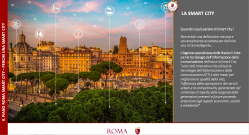
This quick post is little more than a placeholder for a larger discussion about the role of digital technology in the city, specifically in this “eternal” city. I’ve been teach a course on the topic “Smart City Rome” — actually just one module in a course about four European cities, including Vienna, Granada and Paris — and have been intrigued with the notion since studying with William Mitchel (“Mr. Cybercities”) at Harvard and various encounters with Carlo Ratti and the Senseable Cities Lab at MIT.
I am happy that Rome is moving forward in its efforts to embrace digital technology. Like “sustainable” cities and social justice and equity, there is nothing not to like. The plan announced in the Fall of 2019 and launched publicly today covers the right objectives. The role of the “city user” as a protagonist, not just a recipient, is on target.
I haven’t had time to dig deeper but I’m intrigued by the mention of 81 projects already underway. What are they? There is no link to further information and as much as I am drawn to zoom in on the PDF the enticing descriptions are illegible. How does the interested city user learn more?
This leads to my general skeptical reaction about smart city jargon in the context of Roma Capitale. I really DO appreciate the intentions but it’s impossible not to observe a serious disconnect between the language and the reality of the city.
Titles such as “una citta’ aperta” (an open city) clash against the realities on the ground. Just today I was turned away from crossing (as a pedestrian) Piazza Colonna and Piazza del Campidoglio, told by police that for undisclosed reasons these public spaces were not accessible.
The ATAC app which should track the arrival time of city buses simple said “no buses”. The civic platform built to receive citizen complaints still took way too many steps to insert the most obvious observations: that most of the pedestrian islands in the city are inundated with private cars, and the smart platform does nothing to change that. As Greta might say, our house is on fire so it’s a bit late to discuss the newest smart smoke sensors.
I don’t want to end this on the usual (Roman) defeatist note, criticizing one solution because there are other problems. That is too easy and not too helpful. Let’s just ask nicely that the obvious dysfunctions be addressed and not ignored so we can turn our focus to the good stuff, like smart, sustainable, equitable, edible and fantastic cities.

Via Alessandrina, Arrivederci
(Cross-posting from TRA_20 Blog)

This post is a reflection on a road which from the 16th century until recently traversed the Imperial Fora in central Rome. It wasn’t a great road like Via Giulia, and in fact in recent years it was often closed, abandoned, overgrown. But like any road it was a connection, it offered a path for people in the city.
Until the 1930s it was the central artery of the Quartiere Alessandrino at the foot of Monti. This neighborhood fell victim to Mussolini’s sventramenti, the fascist era demolitions of large swaths of the medieval and Renaissance city. At the time, parts of the Imperial Fora (which lay —and still lie — at ancient ground level here) were excavated and then reburied, landscaped over as an archaeological park aligning the huge triumphal boulevard Via dei Fori Imperiali.
There are various other phases of the story and — if this were a research paper and not a reflective blog post — I would go on the illustrate the various proposals and projects for the Via dei Fori Imperiali, all very interesting, all the subject of animated discussions before being archived and forgotten.
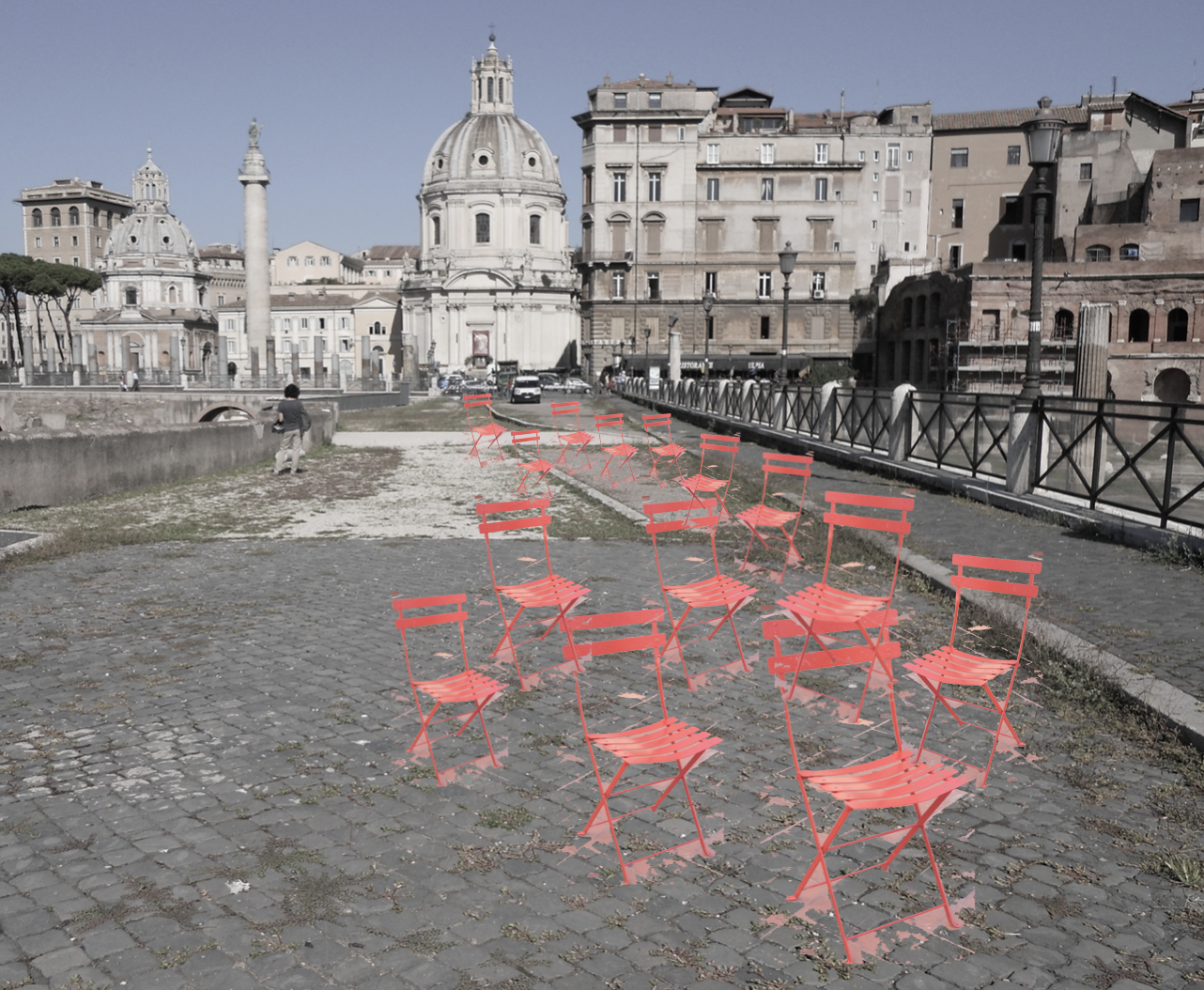
In one of these episodes that involved me personally I helped the association Tevereterno Onlus, of which I was director at the time, draft a proposal to make Via Alessandrina a civic space with the installation of movable chairs (a nod to urbanist Holly Whyte). Although the project itself would have cost nothing, the administration didn’t have the funds to launch the open competition which was required so that, if any other organization wanted to donate free seating, they could compete fairly to do so (not kidding). The project never happened.
I recall the street being open, so one could walk along past the Forum of Augustus to Trajan’s Column, a scenic historic tour on which I took students for years. Then for a period it was closed for supposed archaeological excavations for which there was never any funding. Under Mayor Marino, the same mayor who finally succeeded in banning cars from Via dei Fori Imperiali, they reopened the street, a simple and yet revolutionary move.
Now that section of road has been removed, with the effect being, on the one hand, to unify the Forum of Trajan with Trajan’s Markets, as they were in antiquity, but on the other to interrupt (for good?) the road. In effect, a museum has been enlarged at the cost of civic space.
At first glance the unification of the archeological park seems like an improvement, both for visitors who have paid admission and can now explore a more cohesive site, and also for visitors above who can better understand the ancient complex in its entirety.
But on another level, the literal level of today’s Rome, this is yet another example of what my friend the architectural historian Allan Ceen calls Roma Cancellata, the fencing off and erasure of historic public space in the city.
And as archaeologist Jan Gadeyne pointed out in conversation just now, it represents the erasure of one of the few remaining traces of the post-antique Forum. For Gadeyne this is a simplistic approach to intervening in archaeological sites which should have been superseded generations ago. Sure, a small piece remains at the level of the Forum of Augustus but instead of a road which goes somewhere it is a dead end museum piece.
The elimination of Via Alessandrina is indeed one more disturbing episode in the ongoing trend of closing public spaces. Examples include the barricades in Piazza Colonna and other government hotspots, the creation of new “pubic” spaces like MAXXI that were born gated (open only at certain times and for certain types of behavior), or the closure of so many formerly pedestrian piazzas by (not to) private motor vehicles. In cases like Piazza Farnese the public benches and a large part of the piazza have been privatized by the French Embassy in the name of security, and the center of the piazza is occupied, illegally, by parked cars. What was once an open civic space where children played has become effectively closed to anyone not protected by their own automotive shell.
What could have been done instead at Via Alessandrina? It’s not hard to imagine an intervention that reopened the continuity, literal and visual, of the Foro di Traiano while keeping a passage, a passerella, following the traces of the Renaissance Via Alessandrina. I’m thinking of a lightweight steel structure, in the language of Francesco Cellini’s bridge over Via degli Annibaldi or the Nemesis/Labics project for the walkway at the eastern edge of Trajan’s Forum. Now that the cars have been removed from Foro Traiano (this is actually the name of the piazza adjacent to Trajan’s Column), it should also be redesigned as a civic space and not simply left as the car-less parking lot it is today.




Public Space in Rome
Some excerpts from the writing I am doing these days about the challenges of public space in the eternal city.
Cities are complex urban artifacts which facilitate flows — flows of people, resources, data, flows of energy, money, ideas. They are neither organisms nor machines; they are cities. They work best when they allow unobstructed and casual movement of people, when civic spaces are available for spontaneous encounters, what Hannah Arendt called the “space of human appearance.”


When planning for mobility we shouldn’t always automatically think of moving people from point A to B to get C but may discover that C can come to us, or that I can get C nearby from a local provider. A good rule of thumb in civic planning is to eliminate externalities and instead ensure that everyone pays a price or penalty equal to the harm done, regardless of where it is done. If the negative impact of a bus is x divided by the number of passengers y then each passenger should pay x/y, even if some passengers may not have even the minimum resources and that is another problem to be solved.
Holding individuals and organizations accountable for the costs associated with their behavior may seem impossible amidst the chaos of the city but we have increasingly smart technology designed to do just that, to monitor and guide complex processes. If Google can learn from my online behavior and send me targeted advertizing, our municipal governments should be able to monitor our waste disposal, our mobility choices, our water consumption and charge us accordingly. This may raise fears of big-brother if we think of our city officials or corporate engineers in back rooms monitoring our lives, but transparency can go along way to making them accountable for what goes on in those rooms.
Sure, good old civil behavior would be a simpler and nicer solution, but it seems to have gone out of fashion and shows no signs of coming back.
Piazza Tevere Rises Again

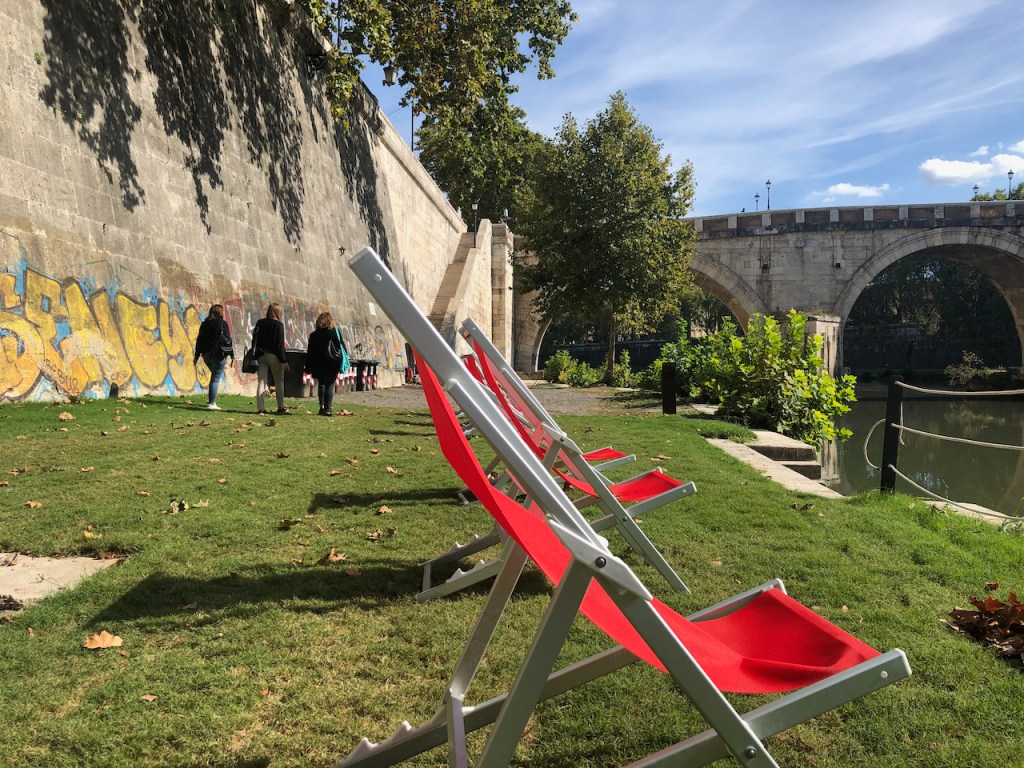
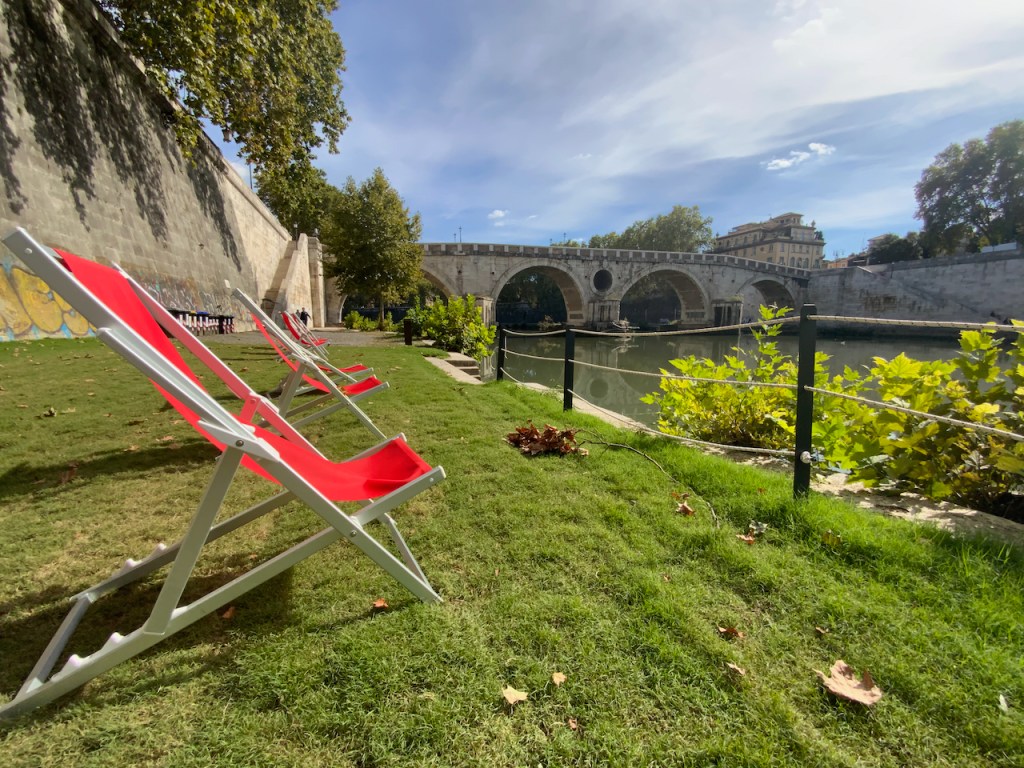
I spent a blissful hour lounging on the banks of the Tiber today, taking in the September sun after several days of rain. I had put off my “site inspection” of the much awaited urban beach but I chose an excellent day to visit.
The recent installation of grass, beach chairs and cafe furniture along the left bank between Ponte Sisto and Ponte Mazzini should be seen as a pilot project for future river improvements.
Like any urban riverfront, the Tiber offers an enormous opportunity for urban green, for relaxation and exercise, and for safe outdoor socialization during the pandemic. I’ve always insisted that a central park such as the Tiber (potentially) would soften the experience of tourists overwhelmed by the chaos and crowds, giving them a place to recharge their batteries and prolonging their stays (the principle measure of the tourist economy).
In addition to the chairs and tables, almost 5,000 m2 of lawn have been rolled out, 40 potted plants complete the “green infrastructure” The installation will last until the end of October (25/10/2020) and hopefully be repeated.
The operation carried out by the Ufficio Speciale Tevere di Roma Capitale, coordinated by Agenda Tevere Onlus and designed by Associazione Italiana di Architettura del Paesaggio (AIAPP). Sponsors include Acea, Italgas, Terna, Rainbird, plasticWOOD.it, and Associazione Tevereterno.
While lounging in the sun on a red “sedia sdraio” or deck chair, I called various old friends from the days I helped Tevereterno implement the Triumphs and Laments project. Although 4 years had passed since I stepped down as Director, and William Kentridge’s works were barely visible across the water, it was great to catch up from the public space we all worked so hard to make a reality. I remember thinking on the night of the T&L inauguration that this piece of riverfront would never be the same, imagining its new attractiveness due to the international spotlight. It took a while, as everything in Rome does, but that vision has finally come true.



Transition: Green Roof

As the coronavirus lockdown continues into its second month in Italy the mood has changed from the early collective sense of urgency and participation to a more reflective consideration of what could happen next. It is much easier to focus on the present and to repeat the mantras of “stay home” and “wash your hands” than it is to envision the world as it will change when the immediate medical crisis has passed.


Some talk of a return to normal, and hope to achieve it as soon as possible. Others for whom the pre-coronavirus situation was anything but normal see this is an opportunity to bring about long needed changes. I count myself with this second group.
We have demonstrated in the past month that collectively as a race we are capable of amazing things when threatened. I’m not surprised by this, I have great confidence in humans. What has always surprised me is that the far more serious threat of global warming has not yet elicited such measures.
These thoughts are addressed brilliantly in this article by Jeremy Lent.
In my own practice in Rome I am inspired in this period of lockdown to see nature retake the city to a certain degree. I’m not just referring to the wonderful photos of ducks in the fountains and grass growing between the cobblestones of Piazza Navona, although these are inspiring. Nor is it the silence that allows us to hear bird calls usually drowned out by traffic. By nature I am also referring to human nature, to people who walk to their local shops, who gather in courtyards (respecting physical distancing but finding social connections they had overlooked before). As Lent points out “the phrase “social distancing” is helpfully being recast as “physical distancing” since Covid-19 is bringing people closer together in solidarity than ever before.”
I have taken to envisioning how Rome might reboot after the lockdown.
I pray that we don’t go back to business as usual (or worse, as some regressive merchants suggest reversing past gains to open the city to even more traffic in the name of a fictitious economic recovery).
Here are some of my dreams for post-lockdown Rome:
A virtually car-free city center. With so few cars on the streets these days public transit has been flowing smoothly, deliveries have become far more efficient, the air noticeably cleaner, and city streets safer and more pleasant. Let’s reopen for people but not private vehicles. This is a chance to demonstrate that without private cars everywhere, buses run smoothly and bicycling and walking are much less stressful.
The rediscovery of local resources. Many people who were accustomed to driving to supermarkets and big box stores have found that shopping in their neighborhood is a joyful experience. If the true cost of products (externalities included) were to be applied local shopping would become economically competitive as well. Local, seasonal, and socially responsible purchases will have a positive effect on communities and the planet.
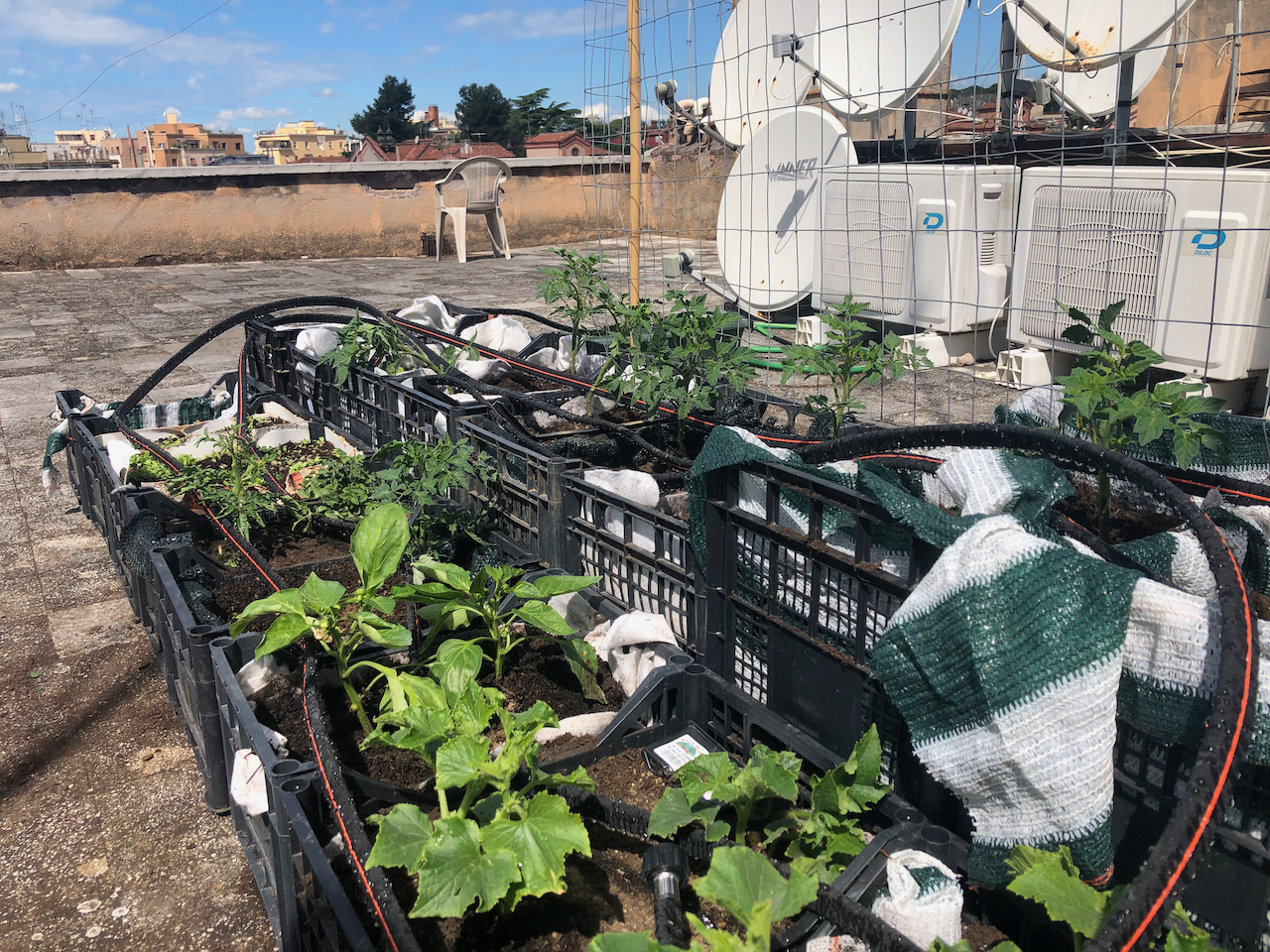
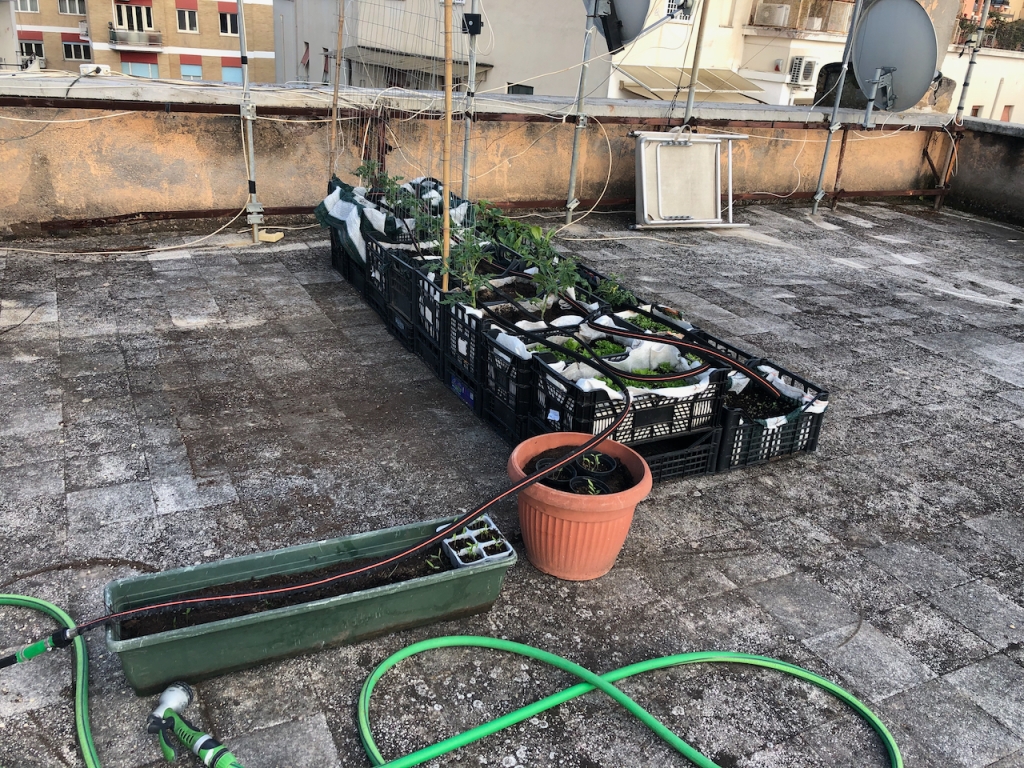
Revitalization of place. With parks closed and distant beaches of resorts out of reach, people have been looking around their neighborhoods and realizing how many nearby places are underutilized. Not just homes that have been given over to tourist accommodations, schools which are left empty after hours and off season, or abandoned factories and shuttered shops, I’ve seen more activity in our condominium courtyard than ever before. And residents have started to discover roof terraces which have enormous potential for energy and food production, not just outdated television aerials.
I’m optimistic that the city that emerges from this crisis will be astonishingly beautiful. Rome is already a spectacular place despite its past problems of traffic, poor management, corruption and overtourism. We have such an amazing opportunity to press reset and reboot with a new operating system, one which privileges and incentivizes people, green space, renewable energy, efficient water and resource management, and clean, safe mobility.
Reading Lewis Mumford recently I came across a phrase (written in the early 1960s) that resonated particularly, his suggestion that we “advance from a money economy to a life economy.” We can and should all be talking about what this could look like, a resource-based economy aimed at equity in place of the failed money-economy which has resulted in extreme and deadly inequity.

Una Roma Possibile

This post was written in Italian in response to a Facebook thread filled with bile spewed by well-meaning car addicts who infest the streets of Rome. I’ll take a shot at translating it into English, but here it is fresh off my keyboard, ignoring the sage advice to sleep on it before one hits publish.
Scrivo quest’ultimo commento e poi me ne vado via da questo gruppo che mi fa male al fegato. Leggo i commenti delle persone che vedo in giro a Roma, dietro il volante, bloccato in traffico, persone che pensano di essere liberi. Leggo commenti di persone che ritengono “normale” girare fra la gente rinchiusi in scatole pesanti e pericolosi, ma assurdo usare i piedi per raggiungere una destinazione urbana. Il linguaggio stesso é sbagliato: parlate di strade chiuse quando passano le persone, di strade aperte nelle quali un bambino non può giocare senza essere ammazzato, velocità a “passo d’uomo”, quando senza le auto che bloccano un’uomo (o donna) potrebbe viaggiare normalmente con dei mezzi pubblici.
Vi auguro a tutti i lettori che credono che l’auto é necessario di fare una bella vacanze in una città normale. Andate a Barcelona, per esempio, dove le auto non sono vietati ma nessuno pensa di usare l’auto privato per raggiungere una destinazione urbana se non per un trasloco o un matrimonio o per accompagnare un anziano o bambino (e neanche in questi casi serve veramente). Andate a Boston, la mia città natale, dove non ci giro mai in auto perché il parcheggio in città costa il suo vero valore, cioè tanto. Ed é pieno di persone che lavorano, che studiano, che fanno acquisti, tutto senza le auto private.
Ho capito, oggi a Roma non é facile. Se vengo da Tor Sapienza a Piazzale Flaminio non lo faccio in bici, chiaro (anche se oggi sarebbe il mezzo più sano e più veloce). Ma invece di pretendere di poterlo fare con 2 tonnellate di rifiuti sotto il sedere pretendo un servizio pubblico normale, autobus che passano in orario ogni 5-10 minuti, che fanno coincidenza con la metro che passa ogni 3 minuti, 24 ore al giorno, come nelle città normale (a New York non esistono le “notturne”), pretendo questo, non di lasciare la mia proprietà privata, brutta e inquinante in mezzo alla piazza pubblica. Pretendo questo e non capisco perché sento tutta questa rabbia contro una pista ciclabile e non contro un servizio pubblico disfunzionale!
La soluzione é difficile ma non impossibile, e neanche troppo costoso. Vedete la tecnologia che si sta sviluppando (ed implementando) Elon Musk fra talpe meccaniche e veicoli autonome. Ma l’archeologia? Basta andare sotto l’archeologia, e fare stazioni piccoli e strategiche (che poi diventano anche musei vivi per tutti). E chi paga? Project financing, i privati investono in Roma quando Roma garantisce il rispetto delle regole.
Una Roma migliore é necessaria e fattibile.
Una Roma collegata é possibile, un centro storico dove ogni destinazione dista meno di 10 minuti a piede da un trasporto pubblico comodo ed efficiente.
Una città metropolitana é possibile, nella quale puoi raggiungere il trasporto pubblico a piede, in bici, o con servizi condivisi, park and ride, car-sharing, ecc. e raggiungere il centro in pochi minuti.
Una Roma non-interotta é possibile, dove non devi aspettare fiumi di macchine per andare da un lato della strada all’altro.
Una Roma civile é possibile nella quale un bambino o un anziano può caminare senza sentire dire “attento alla macchina” (come a Venezia dove i ragazzi crescono senza il terrorismo automobilistico).
Una Roma dove i turisti mischiano con i romani invece di essere segregati sulle marciapiede mentre i romani sfrecciano in macchina bestemiando, anche questa Roma é possibile.
A possible Rome
I’m writing this last comment and then leaving this group; it’s bad for my liver. I am reading the comments of the people I often see behind the wheel around Rome, stuck in traffic, people who think they are free. I am reading comments from people who consider it “normal” to cruise through crowds enclosed in big, dangerous cans, but absurd to use their feet to reach an urban destination. The language itself is wrong: you talk about “closed” roads which are open to people, not cars, about “open” streets where a child cannot play without being killed, “walking pace” (in italian the term is “man’s pace” speed, when without the cars that block a man (or woman) ) could travel normally by public transport.
I wish all you readers who believe that the car is necessary to take a nice holiday in a normal city. Go to Barcelona, for example, where cars are not prohibited, but nobody thinks of using the private car to reach an urban destination if not for a move or a wedding or to accompany an elderly person or child (and even in these cases it is not really needed ). Go to Boston, my hometown, where I never drive around because parking in the city costs its true price, that is a lot. And it’s full of people who work, study, shop, all without private cars.
I understand, today in Rome it is not easy. If I come from Tor Sapienza to Piazzale Flaminio I don’t do it by bike, of course (even if today it would be the healthiest and fastest way). But instead of pretending to be able to do it with 2 tons of waste under my butt, I demand a normal public service, buses that run on time every 5-10 minutes, which coincide with the metro that runs every 3 minutes, 24 hours a day, as in cities normal (in New York there are no “night”), I claim this, not to leave my private property, ugly and polluting in the middle of the public square. I demand this and I don’t understand why I feel all this anger against a bicycle lane and not against a dysfunctional public service!
The solution is difficult but not impossible, and not too expensive either. See the technology that Elon Musk is developing (and implementing) between mechanical moles and autonomous vehicles. But archeology? Just go under archeology, and make small and strategic stations (which then become living museums for everyone). And who pays? Project financing, private individuals invest in Rome when Rome guarantees compliance with the rules.
A better Rome is necessary and feasible.
A connected Rome is possible, a historical center where each destination is less than 10 minutes on foot from a comfortable and efficient public transport.
A metropolitan city is possible, where you can then reach public transport on foot, by bike, or with shared services, park and ride, car-sharing, etc. and reach the center in a few minutes.
A non-interrupted Rome is possible, where you don’t have to wait for rivers of cars to go from one side of the road to the other
A civilized Rome is possible in which a child or an elderly person can walk without being told “attentive to the car” (as in Venice where children grow up without car terrorism). A Rome where tourists mix with the Romans instead of being segregated on the sidewalk while the Romans speed by car cursing, even this Rome is possible.

 SUSTAINABLE ROME